
Skip to product information
1 of 1

Sweet Alyssum (Lobularia maritima)

Sweet Alyssum (Lobularia maritima)

Lobularia maritima

Regular price $0.00
Regular price Sale price $0.00
Sale Sold out
Taxes included. Shipping calculated at checkout.
Size

$100 minimum spend required for checkout.

Why we love this plant!

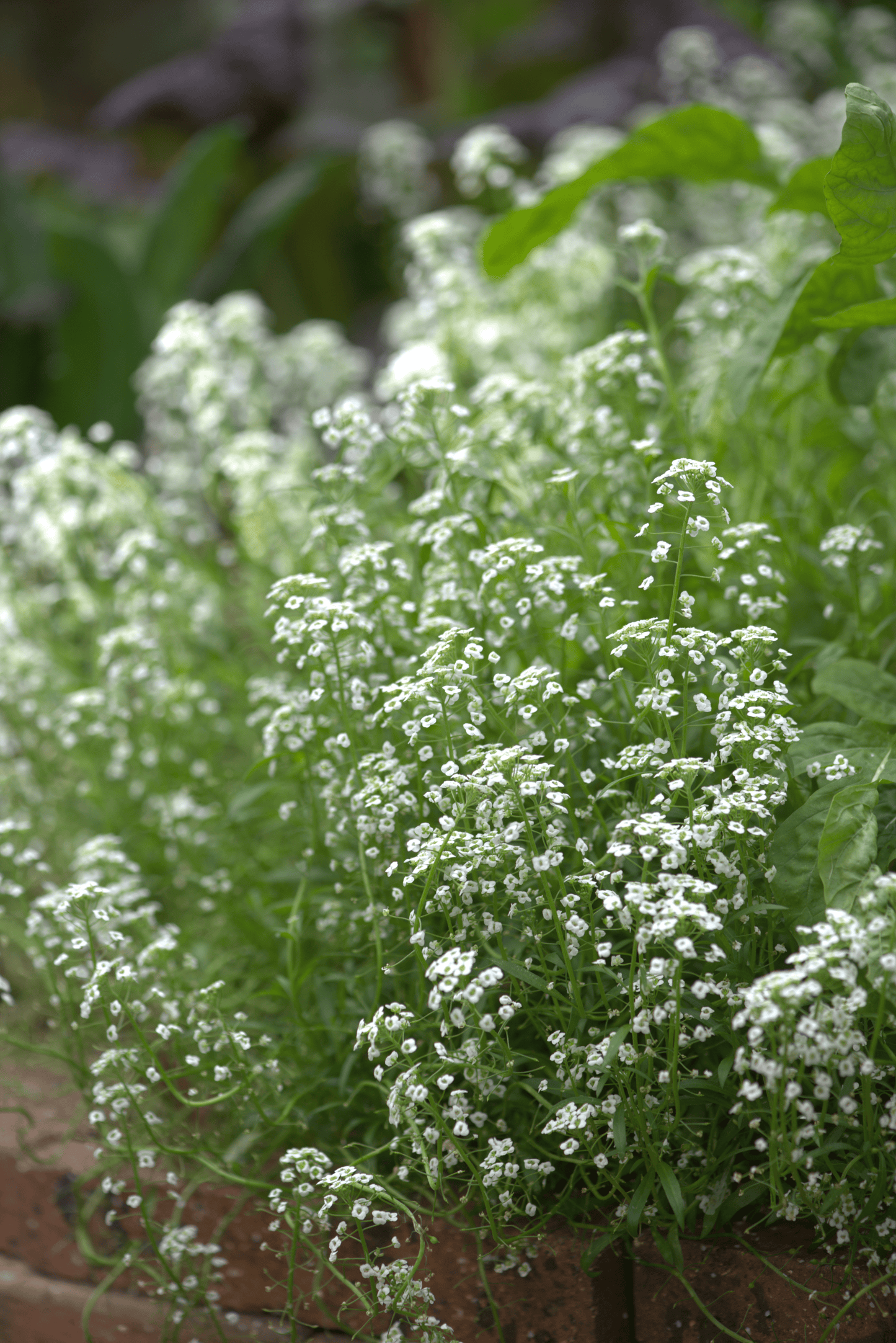
A low-growing, spreading annual that forms a dense mat of fine foliage covered in small clusters of honey-scented white flowers. In South East Queensland gardens it performs as a cool-season filler, groundcover, or border edge. Its long flowering period and accessible flower form make it a consistent food source for pollinators, hoverflies, and other beneficial insects, which can assist with natural pest management in vegetable gardens.

Care Considerations

Watering preferences:

  • Prefers consistent light moisture while establishing, then tolerates short dry periods. Avoid keeping the soil constantly wet.

Mulching preferences:

  • A light layer of sugar cane mulch helps retain soil moisture, but keep mulch clear of the stems to reduce the risk of rot.

Fertilising preferences:

  • A light application of a balanced organic fertiliser at planting can be applied, but generally not required. Excess nitrogen encourages foliage over flowers.

Pruning preferences:

Good to Know:

  • Supports pollinators, including bees and butterflies
  • Attracts hoverflies and other beneficial insects that prey on aphids and similar pests
  • Useful as a companion planting in vegetable gardens to support natural pest control
  • Self-seeds readily; unwanted seedlings are easy to remove
  • Can decline in prolonged heat and humidity — a light trim and reduced watering may help it recover into autumn

Plant Details

Common uses: Border planting, Coastal garden, Container growing, Cottage garden, Courtyard garden, Fragrant, Kid & pet-friendly, Pollinator-friendly, Playground planting, Trailing plant, Winter interest, Fast growing, and Seasonal colour
Expected Height Range: 0.1 m - 0.2 m
Spread Range: 0.2 m - 0.4 m
Preferred positioning: Full sun and Partial sun
Flower Season/s: Winter, Spring, and Autumn
Watering Preferences: Prefers consistent light moisture while establishing, then tolerates short dry periods. Avoid keeping the soil constantly wet.
Mulching Preferences: A light layer of sugar cane mulch helps retain soil moisture, but keep mulch clear of the stems to reduce the risk of rot.
Fertilising Preferences: A light application of a balanced organic fertiliser at planting can be applied, but generally not required. Excess nitrogen encourages foliage over flowers.
Key Characteristics: Supports pollinators, including bees and butterflies. Attracts hoverflies and other beneficial insects that prey on aphids and similar pests. Useful as a companion planting in vegetable gardens to support natural pest control. Self-seeds readily; unwanted seedlings are easy to remove. Can decline in prolonged heat and humidity — a light trim and reduced watering may help it recover into autumn.
Flower Colour/s:
Plant life cycle: Annual
Habitat: Native to the Mediterranean region, including coastal areas of southern Europe and the Canary Islands, where it grows in sandy, rocky, and coastal sites with free-draining soils.
Leaf information: Small, narrow, grey-green leaves on fine branching stems, forming a soft, low mat.
Preferred Soil: Prefers well-drained soils. Performs in sandy or loamy soils of average fertility. Tolerates poorer soils but is sensitive to waterlogging.
View full details
Important Notice:

The information on this page is intended as a general guide to help you make informed decisions about your garden. It's your responsibility to assess whether this information suits your specific situation and local conditions.

While we work hard to keep our information accurate and current, gardening involves many variables that can affect plant performance and suitability. What works in one garden may not work in another.

Livable Garden Centre doesn't provide guarantees or warranties about the completeness, accuracy, or reliability of this information. We also can't guarantee specific outcomes for plants or products featured on our website. Use this information at your own discretion and risk.

Always consider your local climate, soil conditions, and specific garden needs when making planting decisions. When in doubt, consult with local gardening professionals or extension services.