
Skip to product information
1 of 1

Hairy Bush-Pea (Pultenaea villosa)

Hairy Bush-Pea (Pultenaea villosa)

Regular price $3.65
Regular price Sale price $3.65
Sale Sold out
Taxes included. Shipping calculated at checkout.
Size
Next delivery date:

$100 minimum spend required for checkout.

Why we love this plant!

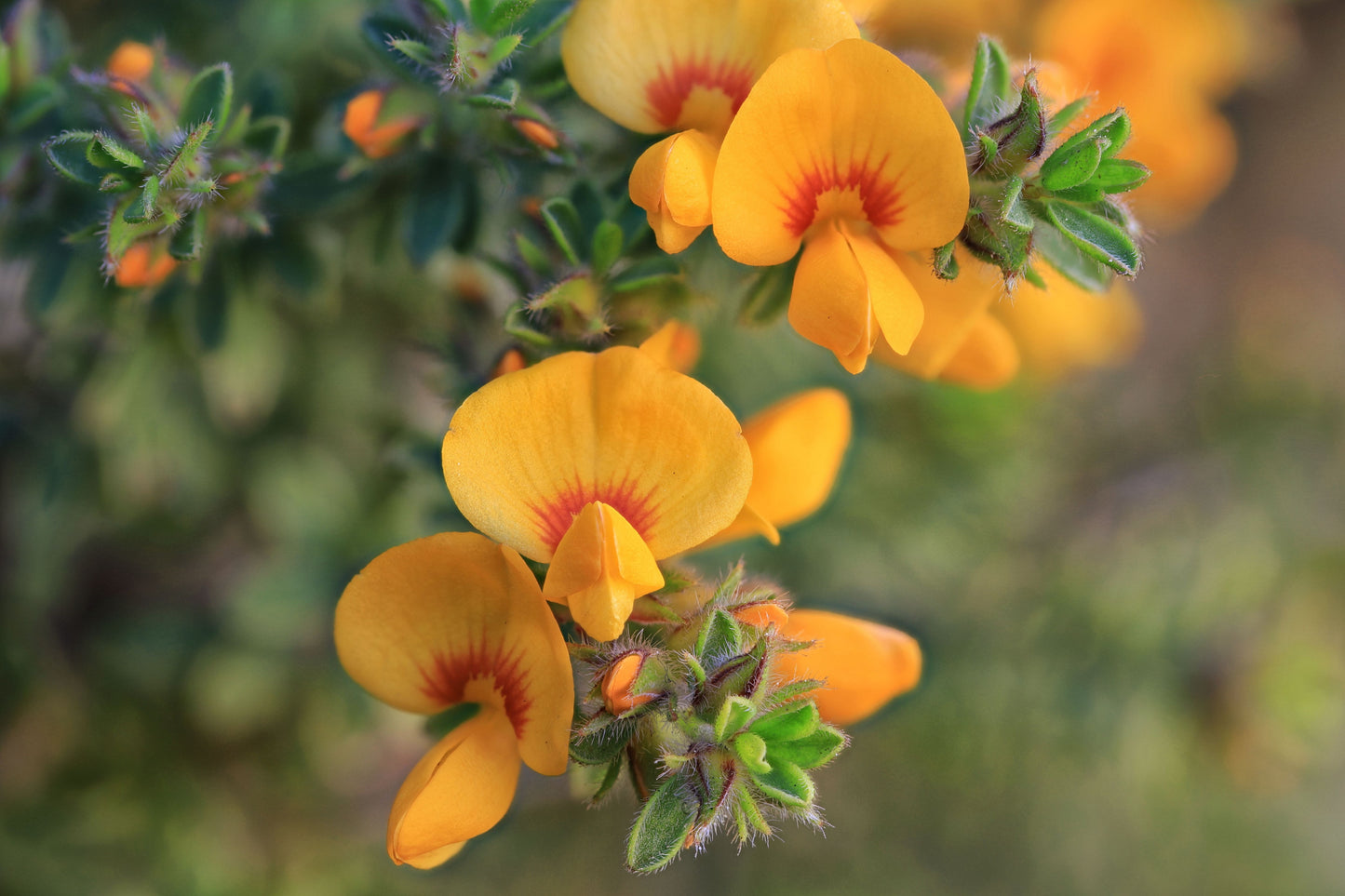
A compact native shrub that thrives in South East Queensland, this plant produces masses of bright yellow-orange pea flowers with red markings, attracting bees and other pollinators in spring and early summer. It plays an essential role in supporting local wildlife while adding texture and colour to bushland gardens, rockeries, or native landscapes. Once established, it is drought-tolerant and requires little maintenance, making it ideal for water-wise gardening. Its dense, bushy habit also provides shelter for small insects and birds, enhancing the local ecosystem.

Care Considerations

Watering preferences:

  • Drought-tolerant once established, but occasional deep watering during prolonged dry periods may help maintain appearance.

Mulching preferences:

  • Applying mulch may help retain moisture and suppress weeds.

Fertilising preferences:

  • Fertilisation is not necessary, as this species thrives in nutrient-poor soils.
  • If fertilising, use a low-phosphorus, slow-release fertiliser.

Pruning preferences:

  • A light pruning after flowering may encourage a denser growth habit and more prolific blooming the following season.

Good to Know:

  • Well-adapted to sandy and well-draining soils.

Plant Details

Common uses: Border planting, Pollinator-friendly, Seasonal colour, Drought hardy/tolerant, Low maintenance garden, Robust/Hardy, Erosion control, Nitrogen fixing, Rocky or dry gardens (Xeriscape), Coastal garden, and Textural interest
Expected Height Range: 0.3 m - 1 m
Spread Range: 0.5 m - 1 m
Preferred positioning: Full sun, Partial sun, and Partial shade
Flower Season/s: Summer
Watering Preferences: Drought-tolerant once established, but occasional deep watering during prolonged dry periods may help maintain appearance.
Mulching Preferences: Applying mulch may help retain moisture and suppress weeds.
Fertilising Preferences: Fertilisation is not necessary, as this species thrives in nutrient-poor soils. and If fertilising, use a low-phosphorus, slow-release fertiliser.
Pruning Preferences: A light pruning after flowering may encourage a denser growth habit and more prolific blooming the following season.
Key Characteristics: Well-adapted to sandy and well-draining soils..
Flower Colour/s:
Plant life cycle: Perennial
Habitat: Native to southeastern Australia, including parts of Queensland, New South Wales, Victoria, and Tasmania. It is commonly found in open forests, woodlands, and heathlands, often in sandy or well-drained soils.
Leaf information: Small, oval green leaves covered in fine, velvety hairs.
Preferred Soil: Tolerates a range of well-draining soils but prefers sandy to loamy soils. Well-suited to low-fertility conditions.
View full details
Important Notice:

The information on this page is intended as a general guide to help you make informed decisions about your garden. It's your responsibility to assess whether this information suits your specific situation and local conditions.

While we work hard to keep our information accurate and current, gardening involves many variables that can affect plant performance and suitability. What works in one garden may not work in another.

Livable Garden Centre doesn't provide guarantees or warranties about the completeness, accuracy, or reliability of this information. We also can't guarantee specific outcomes for plants or products featured on our website. Use this information at your own discretion and risk.

Always consider your local climate, soil conditions, and specific garden needs when making planting decisions. When in doubt, consult with local gardening professionals or extension services.